
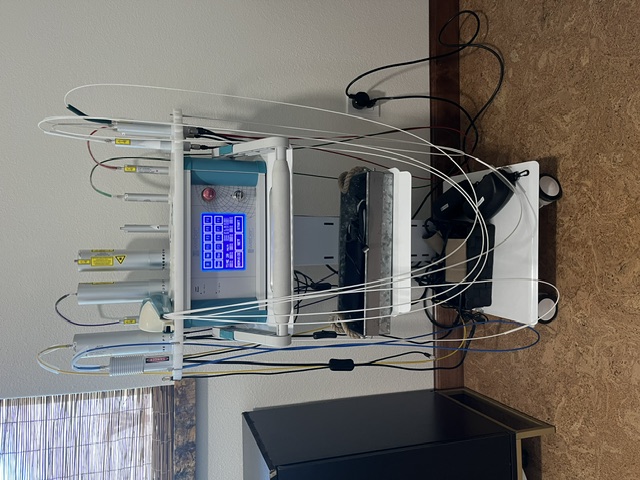
Intravenous Laser Therapy
Intravenous laser therapy is considered an innovative medical procedure in which light of a specific wavelength is delivered directly into the bloodstream – a method also known as “blood irradiation.” This is achieved through a fine optical fiber that is inserted into a vein, typically in the crook of the arm or forearm. The therapy aims to stimulate biochemical processes at the cellular level and to support the body’s natural healing mechanisms.
- Duration of each session: 20–60 minutes
- Number of sessions: Varies depending on the condition, typically 5–10 sessions
- Frequency: Daily or with gaps of up to 7 days between sessions
DISCOVER THE POWER OF LIGHT
Low-Level Laser Therapy (LLLT)
Gentle, effective, and well tolerated.
Low-Level Laser Therapy (LLLT) employs low-intensity laser light to enhance the body’s innate regenerative and regulatory mechanisms.
Unlike ablative surgical lasers, LLLT preserves cellular integrity and promotes healing.
At the cellular level, specific wavelengths of light stimulate increased production of adenosine triphosphate (ATP), the key energy molecule that accelerates tissue repair.
Additionally, laser light stimulates the production of stem cells and growth factors while boosting the production of nitric oxide (NO) and reactive oxygen species (ROS). Patients benefit from improved blood circulation, faster wound healing, effective pain relief, and reduced inflammation.
Backed by scientific research, LLLT is minimally to non-invasive, with a strong safety profile and virtually no side effects, making it an excellent adjunct in various clinical settings.
Benefits
Low-Level Laser Therapy works on multiple levels within the body:
- Pain relief through the inhibition of pain signals and stabilization of cell membranes.
- Reduction of inflammation by activating immune cells and lowering inflammatory markers.
- Accelerated wound healing via improved blood circulation, angiogenesis, and increased ATP production.
- Enhanced cellular energy supply by optimizing mitochondrial function.
- Improved microcirculation and oxygen delivery.